

Introduction
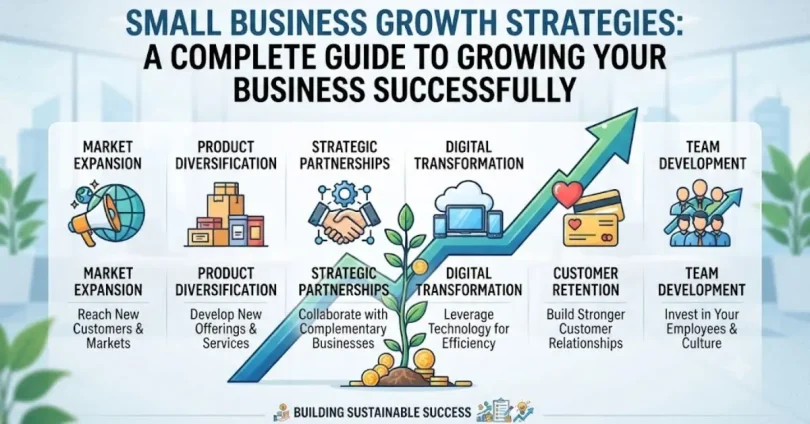
Every entrepreneur dreams of turning a small business into a successful and profitable brand. However, achieving sustainable growth requires more than hard work and determination. It demands careful planning, smart decision-making, and the ability to adapt to changing market conditions. This is where Small Business Growth Strategies become essential.
Whether you own a retail store, offer professional services, run an online business, or have recently launched a startup, having the right growth strategy can help you attract more customers, increase revenue, and stay ahead of competitors. Growth does not always mean opening multiple branches or hiring dozens of employees. Sometimes, even small improvements in customer service, marketing, or operations can lead to significant business success.
Many business owners struggle because they focus only on making daily sales instead of building a long-term growth plan. A successful business balances short-term profits with long-term development. By understanding customer needs, improving products or services, and using effective marketing techniques, businesses can continue growing even during challenging times.
In this comprehensive guide, you will learn the most effective Small Business Growth Strategies, understand why they matter, discover practical steps to implement them, explore their benefits and risks, avoid common mistakes, and gain expert insights that can help your business thrive in today’s competitive market.
What is Small Business Growth Strategies?

Small Business Growth Strategies refer to planned methods and techniques that help a business increase its revenue, customer base, market share, and overall profitability over time.
These strategies involve improving different areas of a business, including:
- Marketing
- Sales
- Customer service
- Product development
- Financial management
- Employee performance
- Technology adoption
Growth strategies are not one-size-fits-all. A local bakery may focus on attracting repeat customers, while an online clothing store may prioritize digital marketing and expanding into new markets.
The primary goal is to create sustainable growth rather than temporary success.
Why is Small Business Growth Strategies Important?
A business that does not grow often struggles to survive in competitive markets. Growth provides financial stability and opens new opportunities.
Here are some reasons why growth strategies are essential:
- Increase revenue consistently
- Build customer loyalty
- Improve brand recognition
- Stay competitive
- Expand into new markets
- Create employment opportunities
- Improve business value
- Reduce financial risks
Businesses with clear growth plans are generally better prepared for economic changes and customer demands.
Step-by-Step Guide to Small Business Growth Strategies
Step 1: Define Clear Business Goals
Every successful business begins with clear objectives.
Your goals should be:
- Specific
- Measurable
- Achievable
- Relevant
- Time-bound
Example:
Instead of saying:
“I want more customers.”
Set a measurable goal like:
“Increase monthly customers by 20% within six months.”
Clear goals help measure progress effectively.
Step 2: Understand Your Target Audience
Knowing your customers is one of the most powerful growth strategies.
Study:
- Age
- Income
- Interests
- Buying habits
- Problems
- Preferences
For example, if your customers are college students, affordable pricing and active social media marketing may produce better results.
Customer surveys and online reviews provide valuable insights.
Step 3: Build a Strong Brand Identity
Customers trust businesses with a professional image.
Your brand includes:
- Business name
- Logo
- Colors
- Website
- Social media profiles
- Customer experience
Consistency across all platforms improves recognition and credibility.
A memorable brand encourages repeat purchases.
Step 4: Improve Product or Service Quality
Even the best marketing cannot compensate for poor quality.
Regularly evaluate:
- Product quality
- Packaging
- Customer satisfaction
- Delivery process
- Service standards
Collect customer feedback and use it to improve continuously.
Happy customers often become repeat buyers.
Step 5: Focus on Customer Experience
Excellent customer service encourages long-term loyalty.
Simple improvements include:
- Quick responses
- Friendly communication
- Easy return policies
- Fast delivery
- Personalized recommendations
Satisfied customers often recommend businesses to friends and family.
Word-of-mouth marketing remains one of the most effective growth tools.
Step 6: Invest in Digital Marketing
Modern businesses cannot ignore online marketing.
Effective digital marketing methods include:
Search Engine Optimization (SEO)
Improve your website so customers can find your business through search engines.
Content Marketing
Publish helpful blogs, guides, and educational content.
Email Marketing
Keep customers informed about promotions and new products.
Social Media Marketing
Use platforms where your audience spends time.
Share:
- Educational posts
- Customer testimonials
- Behind-the-scenes content
- Product updates
Consistent posting builds trust.
Step 7: Strengthen Sales Strategies
Increasing sales requires more than attracting visitors.
Improve your sales process by:
- Training staff
- Offering limited-time promotions
- Upselling premium products
- Cross-selling related products
- Providing excellent after-sales support
Every customer interaction matters.
Step 8: Manage Business Finances Carefully
Financial management directly affects business growth.
Monitor:
- Revenue
- Expenses
- Profit margins
- Cash flow
- Inventory costs
Avoid unnecessary spending.
Prepare monthly financial reports to make informed decisions.
Step 9: Build Long-Term Customer Relationships
Acquiring new customers costs more than retaining existing ones.
Encourage loyalty through:
- Reward programs
- Exclusive discounts
- Personalized emails
- Birthday offers
- Excellent support
Returning customers often spend more over time.
Step 10: Monitor Performance Regularly
Growth strategies should evolve.
Measure important metrics such as:
- Website traffic
- Sales growth
- Customer retention
- Conversion rate
- Customer satisfaction
- Marketing ROI
Use this data to improve future decisions.
Step 11: Expand Carefully
Business expansion should be planned carefully.
Growth opportunities include:
- Opening new locations
- Launching new products
- Selling online
- Entering new markets
- Partnering with other businesses
Avoid expanding faster than your financial capacity.
Step 12: Embrace Technology
Technology improves efficiency and reduces costs.
Useful tools include:
- Accounting software
- Customer Relationship Management (CRM)
- Inventory management systems
- Marketing automation
- Online booking systems
Automation allows owners to focus on strategic growth.
Benefits of Small Business Growth Strategies

Implementing effective growth strategies provides many advantages:
- Increased revenue and profitability
- Better customer retention
- Stronger brand reputation
- Higher market share
- Improved operational efficiency
- Greater employee motivation
- Better financial stability
- Easier business expansion
- Increased competitive advantage
- Long-term sustainability
- More investment opportunities
- Higher customer satisfaction
Businesses that consistently improve usually outperform competitors.
Disadvantages / Risks
Although growth is beneficial, it also carries certain risks.
Potential disadvantages include:
- Higher operational costs
- Increased financial pressure
- Cash flow challenges
- Hiring difficulties
- Greater competition
- Risk of poor expansion decisions
- Customer service quality may decline during rapid growth
- Inventory management issues
- Increased management responsibilities
- Marketing expenses may rise significantly
Careful planning minimizes these risks.
Common Mistakes to Avoid
Many businesses fail because they repeat common mistakes.
Avoid the following:
Ignoring Customer Feedback
Customers provide valuable suggestions for improvement.
Listening builds loyalty.
Expanding Too Quickly
Rapid expansion without sufficient resources often creates financial problems.
Grow at a manageable pace.
Poor Financial Planning
Many businesses fail because owners do not monitor expenses or cash flow.
Always maintain emergency funds.
Weak Online Presence
Customers increasingly search online before making purchases.
Maintain an updated website and active social media profiles.
Inconsistent Branding
Changing logos, messaging, or customer experience frequently creates confusion.
Maintain consistency.
Neglecting Employee Training
Employees directly influence customer satisfaction.
Invest in regular training.
Depending on One Customer Source
Diversify your marketing channels.
Avoid relying solely on social media or referrals.
Failing to Track Performance
Without measuring results, improvement becomes difficult.
Review business performance regularly.
FAQs
What are small business growth strategies?
Small business growth strategies are planned methods used to increase customers, sales, profits, and overall business performance through marketing, customer service, financial management, and operational improvements.
Which growth strategy works best for beginners?
For beginners, focusing on customer satisfaction, digital marketing, quality products, and clear financial planning usually provides the strongest foundation for sustainable growth.
How long does business growth take?
Growth depends on industry, competition, and strategy. Some businesses experience noticeable improvements within a few months, while others require several years to achieve significant expansion.
Is digital marketing necessary for small businesses?
Yes.
Digital marketing helps businesses reach larger audiences, generate leads, improve brand awareness, and increase sales at relatively affordable costs.
How can small businesses compete with large companies?
Small businesses can compete by:
Offering personalized service
Building strong customer relationships
Responding quickly to customer needs
Focusing on niche markets
Delivering superior customer experiences
What is the biggest challenge in business growth?
Maintaining healthy cash flow while expanding is often the biggest challenge.
Balancing investment, expenses, staffing, and customer satisfaction requires careful planning.
Should every business have a growth strategy?
Absolutely.
Without a growth strategy, businesses often struggle to remain competitive and may miss valuable opportunities for expansion and increased profitability.
Expert Tips & Bonus Points
Experienced entrepreneurs recommend the following practices:
- Focus on solving customer problems rather than simply selling products.
- Build trust before expecting customer loyalty.
- Invest in employee development.
- Review financial reports every month.
- Test new marketing campaigns on a small scale before increasing budgets.
- Continue learning industry trends.
- Encourage customer reviews and testimonials.
- Build partnerships with complementary businesses.
- Use automation to reduce repetitive tasks.
- Keep improving products based on customer feedback.
- Develop multiple income streams to reduce business risk.
- Stay patient because sustainable growth takes time.
One practical example is a neighborhood coffee shop that starts offering online ordering and home delivery. Without opening another branch, the business can increase sales, reach more customers, and strengthen its reputation simply by adapting to changing customer preferences.
Conclusion
Building a successful business requires more than passion and determination. Sustainable success comes from making smart decisions, understanding customers, managing finances carefully, and continuously improving every aspect of the business. The most effective Small Business Growth Strategies focus on creating long-term value rather than chasing quick results.
As markets evolve and customer expectations change, business owners must remain flexible and willing to adapt. Whether your goal is to increase sales, attract loyal customers, expand into new markets, or improve profitability, having a clear growth strategy provides direction and confidence. Small improvements made consistently can produce remarkable results over time.
Remember that growth does not happen overnight. It is a gradual process built on planning, persistence, and continuous learning. By setting realistic goals, investing in customer relationships, embracing digital marketing, monitoring business performance, and avoiding common mistakes, you can build a business that remains competitive and resilient.
Every successful company started as a small business with a vision. The difference between businesses that survive and those that thrive often lies in the strategies they choose and the discipline with which they execute them. Start implementing these Small Business Growth Strategies today, evaluate your progress regularly, and continue refining your approach. With consistency and commitment, your small business can achieve sustainable growth, greater profitability, and long-term success.


