
Quick Key Takeaways
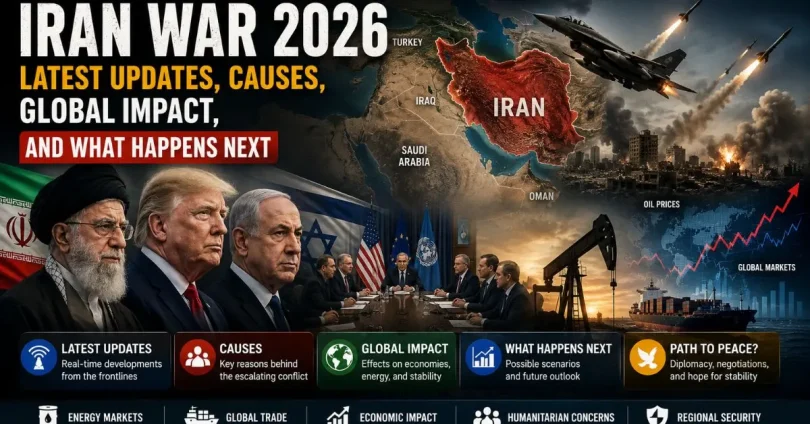
Iran War 2026 remains one of the most significant geopolitical crises affecting the Middle East and global security.
The conflict has implications for oil prices, international trade, financial markets, regional alliances, and humanitarian conditions.
Several major powers continue diplomatic efforts to prevent further escalation while maintaining strategic interests.
The future of the conflict depends on military developments, international negotiations, sanctions, and regional security dynamics.
Introduction
The Iran War 2026 has become one of the most closely followed geopolitical crises of the year, drawing attention from governments, businesses, investors, humanitarian organizations, and millions of people seeking reliable information about its causes, current developments, and potential consequences. As military operations, diplomatic negotiations, economic sanctions, and regional security concerns continue to evolve, the conflict is influencing far more than the Middle East. Its impact can be seen in global energy markets, international trade, financial stability, cybersecurity, and humanitarian relief efforts.
Unlike conflicts that remain largely confined to a single region, the Iran War carries broader international significance because the Middle East plays a vital role in global oil production, maritime trade, and strategic security. Even relatively small changes in regional stability can affect crude oil prices, shipping costs, supply chains, inflation, and investor confidence around the world. This is why governments, multinational companies, financial institutions, and international organizations closely monitor every major development.
The origins of the conflict are complex and cannot be explained by a single event. Long-standing geopolitical rivalries, national security concerns, disputes over Iran’s nuclear program, economic sanctions, proxy conflicts, and competing regional interests have all contributed to an environment of heightened tension. Over time, these issues have combined with diplomatic setbacks and military incidents to create one of the most challenging security situations in recent years.
According to assessments from international organizations, official government briefings, and geopolitical research institutions, the situation remains highly dynamic. Military developments can change rapidly, while diplomatic negotiations continue behind the scenes in an effort to prevent further escalation. At the same time, humanitarian agencies remain focused on protecting civilians and delivering emergency assistance to affected communities. Because conditions on the ground can shift quickly, verified information from authoritative sources is essential for understanding the conflict accurately.
Beyond its immediate military dimension, the Iran War 2026 has significant economic and political implications. Energy-producing nations are closely watching oil supply and transportation routes, financial markets are reacting to geopolitical uncertainty, and businesses are reassessing supply chains and investment strategies. International policymakers are also balancing security priorities with diplomatic efforts designed to reduce tensions and promote regional stability.
This comprehensive guide examines the latest Iran War 2026 updates, explores the historical and political factors that contributed to the conflict, analyzes its impact on the global economy and international relations, and discusses the possible scenarios that could shape future developments. Rather than focusing on speculation or unverified claims, this article presents a balanced, evidence-based overview that helps readers understand why the conflict matters, how it affects the wider world, and what experts believe could happen next.
What Is the Iran War 2026?

Iran War 2026 refers to the ongoing military conflict involving Iran and its adversaries, alongside broader regional and international involvement. The conflict includes military operations, missile and drone attacks, cyber activities, diplomatic negotiations, economic sanctions, and humanitarian concerns. Its significance extends beyond the Middle East because it influences global energy markets, international security, trade routes, and geopolitical stability.
Rather than being a single isolated battle, the conflict represents a complex combination of longstanding regional rivalries, security concerns, strategic alliances, and international diplomatic efforts. Multiple governments and international organizations continue working to reduce escalation while addressing immediate humanitarian and security challenges.
Several key factors continue to shape the conflict:
Regional military operations
Missile and drone warfare
Cybersecurity threats
International sanctions
Diplomatic negotiations
Oil market volatility
Maritime security in strategic waterways
Humanitarian relief efforts
Global economic uncertainty
Understanding these interconnected elements provides essential context for evaluating the latest developments and assessing how the conflict may evolve in the months ahead.
Core Detailed Guide
The Iran War 2026 is shaped by decades of geopolitical tensions, regional rivalries, military strategy, and international diplomacy. While daily developments continue to change, the broader conflict can be understood through its major drivers, global consequences, and potential future scenarios.
Major Causes Behind the Iran War 2026
Several interconnected factors have contributed to the conflict rather than one single event.
| Factor | Explanation | Global Significance |
|---|---|---|
| Regional Security | Long-standing security disputes between Iran and regional rivals | Increases military tensions |
| Nuclear Program | International concerns over Iran’s nuclear activities | Affects diplomatic negotiations |
| Proxy Conflicts | Support for allied groups across the Middle East | Expands regional instability |
| Economic Sanctions | Years of sanctions have increased political and economic pressure | Impacts global markets |
| Maritime Security | Strategic waterways remain vulnerable during conflicts | Influences international trade |
| Missile & Drone Programs | Advanced military capabilities raise regional security concerns | Changes modern warfare dynamics |
According to official statements from international organizations and governments, these issues have accumulated over many years rather than emerging from a single incident.
Timeline of Key Developments
Although the situation changes frequently, the conflict generally follows this pattern:
| Stage | Key Development |
|---|---|
| Rising Tensions | Diplomatic disagreements and military warnings increase. |
| Initial Military Actions | Missile strikes, drone attacks, or targeted operations begin. |
| Regional Escalation | Neighboring countries strengthen security measures. |
| International Response | Global leaders call for restraint while introducing diplomatic initiatives. |
| Economic Impact | Energy prices and financial markets react to uncertainty. |
| Ongoing Negotiations | Diplomatic channels continue alongside military developments. |
This sequence may evolve as negotiations, ceasefires, or additional military actions occur.
How the Iran War Affects the World?
The conflict reaches far beyond the Middle East because of the region’s strategic importance.

1. Global Oil Markets
The Middle East supplies a significant portion of the world’s energy.
When conflict increases:
- Oil prices often become more volatile.
- Shipping costs may rise.
- Fuel prices can increase internationally.
- Energy-importing countries may experience inflation.
Energy analysts closely monitor developments because even limited disruptions can affect international markets.
2. International Trade
Several major shipping routes pass near the conflict zone.
Possible effects include:
- Delayed cargo shipments
- Higher insurance costs
- Increased transportation expenses
- Supply chain disruptions
- Longer delivery times
Businesses involved in global trade often adjust logistics plans during periods of heightened regional instability.
3. Financial Markets
Geopolitical uncertainty frequently influences investor confidence.
Possible market reactions include:
- Increased stock market volatility
- Higher demand for safe-haven assets
- Currency fluctuations
- Changes in commodity prices
- Greater investment risk in affected regions
Financial markets generally respond quickly to major geopolitical developments.
4. Humanitarian Impact
One of the most serious consequences involves civilians.
Humanitarian organizations continue monitoring:
- Population displacement
- Access to healthcare
- Food security
- Infrastructure damage
- Emergency relief requirements
- Protection of civilians
International relief agencies often coordinate humanitarian assistance during prolonged conflicts.
5. Regional Security
Neighboring countries may strengthen military readiness to prevent the conflict from spreading.
This can involve:
- Border security enhancements
- Air defense systems
- Increased intelligence cooperation
- Naval patrols
- Joint military exercises
Regional security remains one of the most closely watched aspects of the conflict.
International Response
Governments and international organizations generally focus on several priorities.
These include:
- Encouraging diplomatic negotiations
- Preventing further military escalation
- Protecting international shipping routes
- Delivering humanitarian assistance
- Supporting regional stability
- Monitoring compliance with international law
Different countries often pursue varying diplomatic strategies based on their national interests and alliances.
Possible Future Scenarios
While predicting conflicts with certainty is impossible, analysts generally discuss several potential outcomes.
| Scenario | Likelihood | Possible Impact |
|---|---|---|
| Diplomatic De-escalation | Moderate | Reduced military activity and renewed negotiations |
| Prolonged Regional Conflict | Moderate to High | Continued economic and security uncertainty |
| Wider Regional Escalation | Low to Moderate | Greater international involvement and increased market disruption |
| Ceasefire Agreement | Moderate | Improved humanitarian conditions and reduced tensions |
| Long-Term Strategic Competition | High | Continued sanctions, diplomacy, and periodic tensions |
Actual developments depend on political decisions, diplomatic negotiations, military actions, and international cooperation.
Benefits of Staying Informed
Following verified updates helps individuals and businesses make informed decisions.
Benefits include:
- Better understanding of geopolitical developments
- Improved awareness of economic risks
- More informed investment decisions
- Greater knowledge of energy market trends
- Awareness of travel and security advisories
- Better understanding of international diplomacy
Reliable information is especially important during rapidly evolving global events.
Use Cases: Who Should Follow the Iran War 2026?
The conflict affects many different audiences.
| Audience | Why It Matters |
|---|---|
| Investors | Market volatility and commodity prices |
| Businesses | Supply chains and international trade |
| Policymakers | Regional security planning |
| Students | International relations and geopolitics |
| Journalists | Current affairs reporting |
| Travelers | Regional safety and travel advisories |
Risks and Challenges
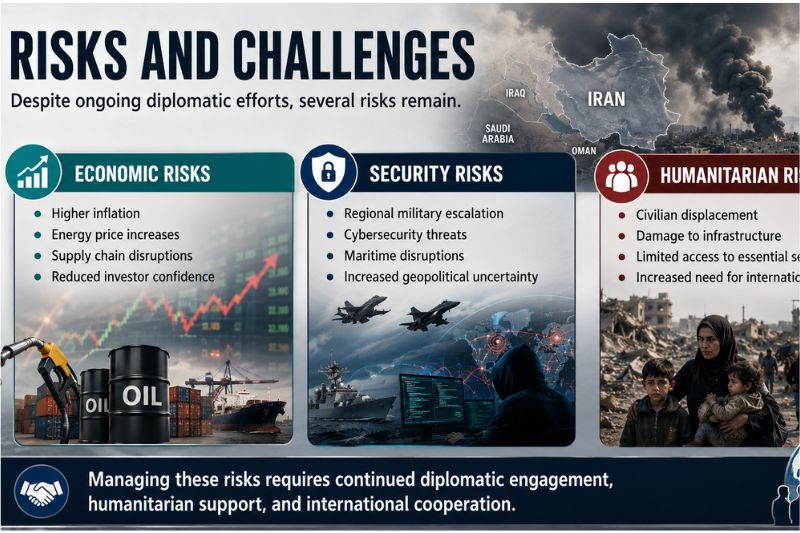
Despite ongoing diplomatic efforts, several risks remain.
Economic Risks
- Higher inflation
- Energy price increases
- Supply chain disruptions
- Reduced investor confidence
Security Risks
- Regional military escalation
- Cybersecurity threats
- Maritime disruptions
- Increased geopolitical uncertainty
Humanitarian Risks
- Civilian displacement
- Damage to infrastructure
- Limited access to essential services
- Increased need for international aid
Managing these risks requires continued diplomatic engagement, humanitarian support, and international cooperation.
Common Mistakes to Avoid
Mistake 1: Assuming the Conflict Only Affects the Middle East
Reality: The consequences extend well beyond the region. Global energy prices, international trade, financial markets, cybersecurity, and diplomatic relations can all be affected by major developments in the conflict.
Mistake 2: Relying on Unverified Social Media Reports
Reality: During fast-moving conflicts, misinformation spreads quickly. Always verify updates through official government statements, international organizations, and established news agencies before accepting them as fact.
Mistake 3: Focusing Only on Military Operations
Reality: Military actions are only one part of the picture. Diplomatic negotiations, economic sanctions, humanitarian aid, cyber activities, and political decisions often play equally important roles in determining how the conflict evolves.
Mistake 4: Assuming Oil Prices Will Always Rise
Reality: While geopolitical tensions can increase market volatility, oil prices are influenced by many factors, including global demand, production levels, strategic reserves, and decisions by major energy-producing countries.
Mistake 5: Believing the Conflict Has a Predictable Timeline
Reality: Armed conflicts rarely follow a fixed schedule. Ceasefires, diplomatic breakthroughs, or unexpected escalations can significantly change the situation within days or even hours.
Mistake 6: Ignoring the Humanitarian Impact
Reality: Beyond military and political developments, conflicts can lead to civilian displacement, damage to critical infrastructure, shortages of essential supplies, and increased demand for humanitarian assistance. Understanding these human consequences provides a more complete picture of the crisis.
Mistake 7: Treating Early Reports as Final Facts
Reality: Initial reports are often incomplete and may be revised as additional evidence becomes available. Waiting for confirmation from multiple credible sources helps avoid spreading inaccurate information.
Mistake 8: Overlooking the Global Economic Effects
Reality: Many people focus solely on regional security, but the conflict can also influence inflation, supply chains, shipping costs, investment decisions, currency markets, and international business operations. Monitoring these broader economic impacts is essential for understanding the conflict’s worldwide significance.
Myths vs. Reality
| Myth | Reality |
|---|---|
| The conflict only involves two countries. | Regional and international actors influence diplomatic, economic, and security developments. |
| Only military operations matter. | Economic policy, diplomacy, humanitarian aid, and international law are also significant factors. |
| Global markets are unaffected. | Financial markets, energy prices, insurance, and trade routes may all respond to major geopolitical events. |
| Information spreads accurately in real time. | Verification often takes time, and some early reports may later be revised or disproven. |
| Peace negotiations end conflicts immediately. | Negotiations can be lengthy and may involve multiple stages before lasting agreements are reached. |
FAQs
What is the Iran War 2026?
The Iran War 2026 refers to the ongoing military and geopolitical conflict involving Iran and its adversaries. It includes military operations, diplomatic negotiations, economic sanctions, cyber activities, and regional security concerns that have global implications.
What caused the Iran War 2026?
The conflict stems from a combination of long-standing regional rivalries, security concerns, disputes over Iran’s nuclear program, proxy conflicts, sanctions, and broader geopolitical tensions. No single event fully explains the conflict.
How does the Iran War affect global oil prices?
Because the Middle East is a major energy-producing region, instability can influence oil supply expectations and transportation costs. Market reactions depend on the scale of disruptions, production levels, and broader economic conditions.
Could the conflict spread beyond the Middle East?
Security analysts generally assess multiple scenarios rather than making firm predictions. Diplomatic efforts aim to limit escalation, but broader regional involvement remains one of several possible outcomes.
How does the conflict affect the global economy?
Potential effects include higher energy costs, supply chain disruptions, increased shipping expenses, financial market volatility, and changes in investor confidence. The magnitude depends on how the situation develops.
Where can readers find reliable updates?
The most dependable information typically comes from official government statements, international organizations, and established news agencies that verify information before publication.
Conclusion
The Iran War 2026 is one of the most significant geopolitical developments of the year, with consequences that extend far beyond the Middle East. While the conflict is centered on regional security and military operations, its effects are felt across the global economy, energy markets, international trade, financial systems, diplomacy, and humanitarian efforts. Governments, businesses, investors, and individuals all have a stake in understanding how events unfold because the decisions made today could influence international stability for years to come.
One of the most important lessons from this conflict is that modern wars are no longer confined to the battlefield. Cybersecurity threats, economic sanctions, disruptions to global supply chains, and shifts in diplomatic alliances have become just as influential as conventional military actions. As a result, policymakers must balance national security concerns with economic resilience and humanitarian responsibilities while seeking opportunities for peaceful dialogue.
Although analysts continue to evaluate several possible outcomes—from diplomatic breakthroughs to prolonged regional instability—no single scenario can be predicted with certainty. The direction of the conflict will depend on military developments, international negotiations, domestic political decisions, and the willingness of all parties to pursue de-escalation. This uncertainty makes it essential to distinguish verified information from speculation and to rely on trusted sources when following new developments.
For readers, staying informed means looking beyond headlines and understanding the broader geopolitical context. Following official government statements, reports from international organizations, and reputable news agencies provides a more balanced perspective than relying on unverified claims circulating on social media. A well-informed understanding of the conflict helps individuals, businesses, and decision-makers assess potential risks, prepare for economic changes, and respond more effectively to an evolving global landscape.
Ultimately, the Iran War 2026 is not only a regional security issue but also a global challenge that highlights the interconnected nature of today’s world. The coming months will be critical in determining whether diplomatic efforts can reduce tensions or whether the conflict will continue to reshape international politics, economic stability, and regional security. By staying informed through credible, evidence-based reporting and monitoring official developments, readers can better understand the implications of this evolving crisis and its potential impact on the future.